
The Blood of Christ Saves
Throughout my years of ministry I have heard many ‘catch phrases’ about salvation. Among my favorites is about the blood of Christ. Phrases such as, ‘saved by the blood’ indicate deep faith in Christ. They also indicate an ignorance of the Scriptures.
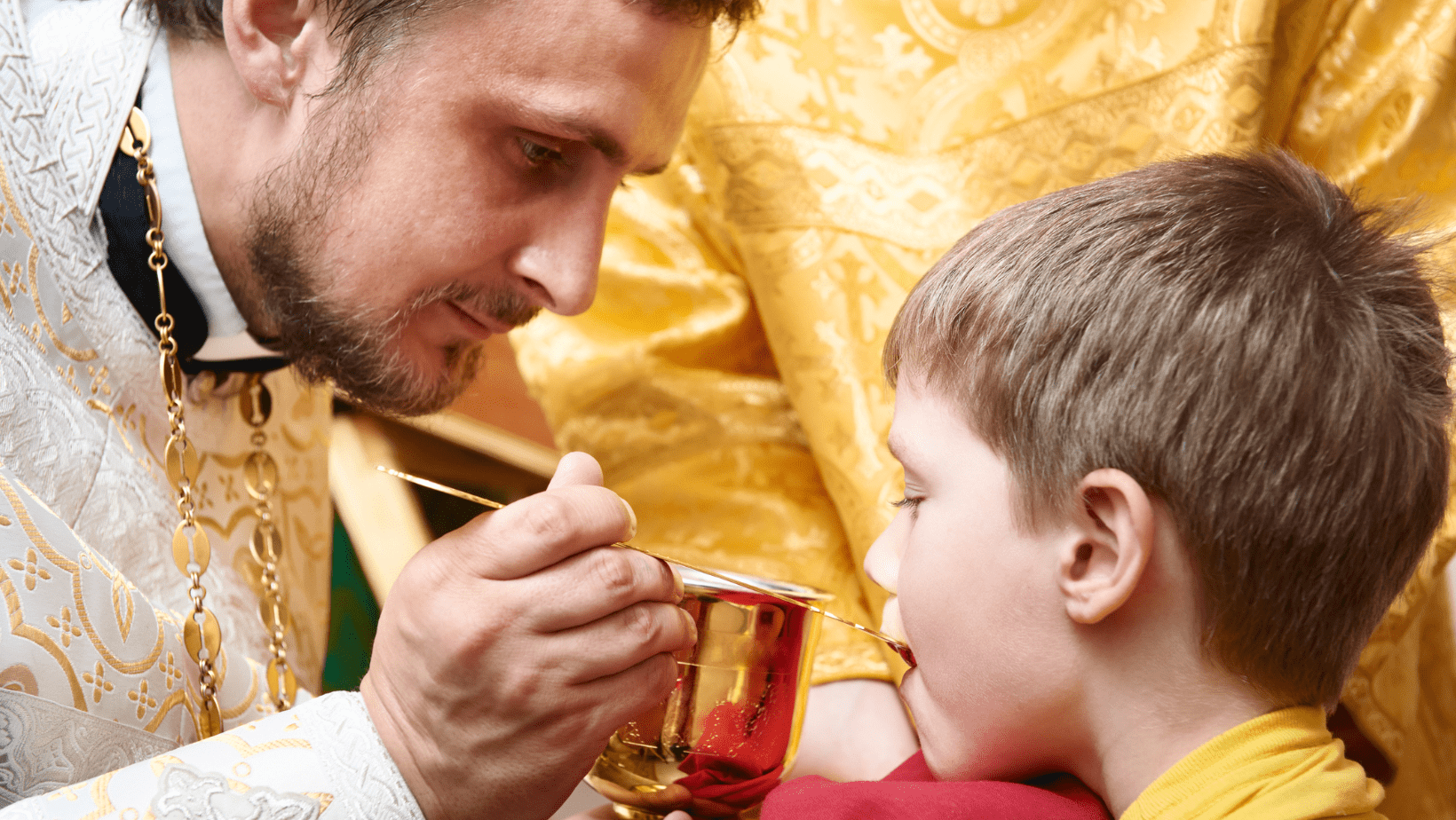
When Orthodox Christians speak about the Blood of Christ, we speak about Holy Communion and the gift that God has given to us. When ‘most’ Protestants speak about the blood of Christ, they speak either about the blood dripping down the Cross or they speak metaphorically.
Throughout the Old Testament, as Saint Paul reminds us today, the sprinkling of blood “ratified” by blood. It is not the blood itself that saves. With Christ something changed and remained the same.
Brethren, by this the Holy Spirit indicates that the way into the sanctuary is not yet opened as long as the outer tent is still standing (which is symbolic for the present age). According to this arrangement, gifts and sacrifices are offered which cannot perfect the conscience of the worshiper, but deal only with food and drink and various ablutions, regulations for the body imposed until the time of reformation. But when Christ appeared as a high priest of the good things that are to come, then through the greater and more perfect tent (not made with hands, that is, not of this creation) he entered once for all into the Holy Place, not through the blood of goats and calves but his own blood, thus securing an eternal redemption. For if the sprinkling of defiled persons with the blood of goats and bulls and with the ashes of a heifer sanctifies for the purification of the flesh, how much more shall the blood of Christ, who through the eternal Spirit offered himself without blemish to God, purify your conscience from dead works to serve the living God. Therefore he is the mediator of a new covenant, so that those who are called may receive the promised eternal inheritance, since a death has occurred which redeems them from the transgressions under the first covenant. For where a covenant is involved, the death of the one who made it must be established. For a covenant takes effect only at death, since it is not in force as long as the one who made it is alive. Hence even the first covenant was not ratified without blood. For when every commandment of the law had been declared by Moses to all the people, he took the blood of calves and goats, with water and scarlet wool and hyssop, and sprinkled both the book itself and all the people, saying, “This is the blood of the covenant which God commanded you.” And in the same way he sprinkled with the blood both the tent and all the vessels used in worship. Indeed, under the law almost everything is purified with blood, and without the shedding of blood there is no forgiveness of sins. Thus it was necessary for the copies of the heavenly things to be purified with these rites, but the heavenly things themselves with better sacrifices than these.
Hebrews 9.8-23
The blood of Christ, Holy Communion is both a ratification of His promise as explained by Saint Paul, and salvation because it unites us in a real way to Him. God no longer expects a mere sprinkling of blood to witness to His promise.
He desires that we receive His Precious Body and Blood ‘inside our bodies’ to comingle our existence with His. His promise of eternal life, ratified by His blood, is manifested in our Communion with Him. If we are united to the Living God, we cannot die.
In the next few weeks we will hear of great miracles of Christ, beyond His Nativity. We will hear of rulers fighting against Him, and loyal followers afraid for their lives. We will watch the Newborn Christ appear as the Savior at His Baptism, and thousands confused by what they see.
Just remember this. Christ was born to die for us. He was born to establish a NEW Covenant with us. This new covenant will need to be ratified by His Blood at Pascha, when we begin to live in Communion with Him. His Blood will save us, but only if we receive it.
That only leaves one question. How often should we receive Holy Communion? I will ask you this. How much do you want to be alive in Christ? Christ said, “Unless you eat the flesh of the Son of Man and drink His blood, you have no life in you.” (John 6.53) Do you want to live?
The Apostles, who heard Christ’s promise and challenge to life, taught that we should receive Holy Communion at least every Sunday. That answer should be enough for any Christian who wants to be alive with Christ.
Tags: Hebrews, Holy Communion, eternal life, gospel of john
